

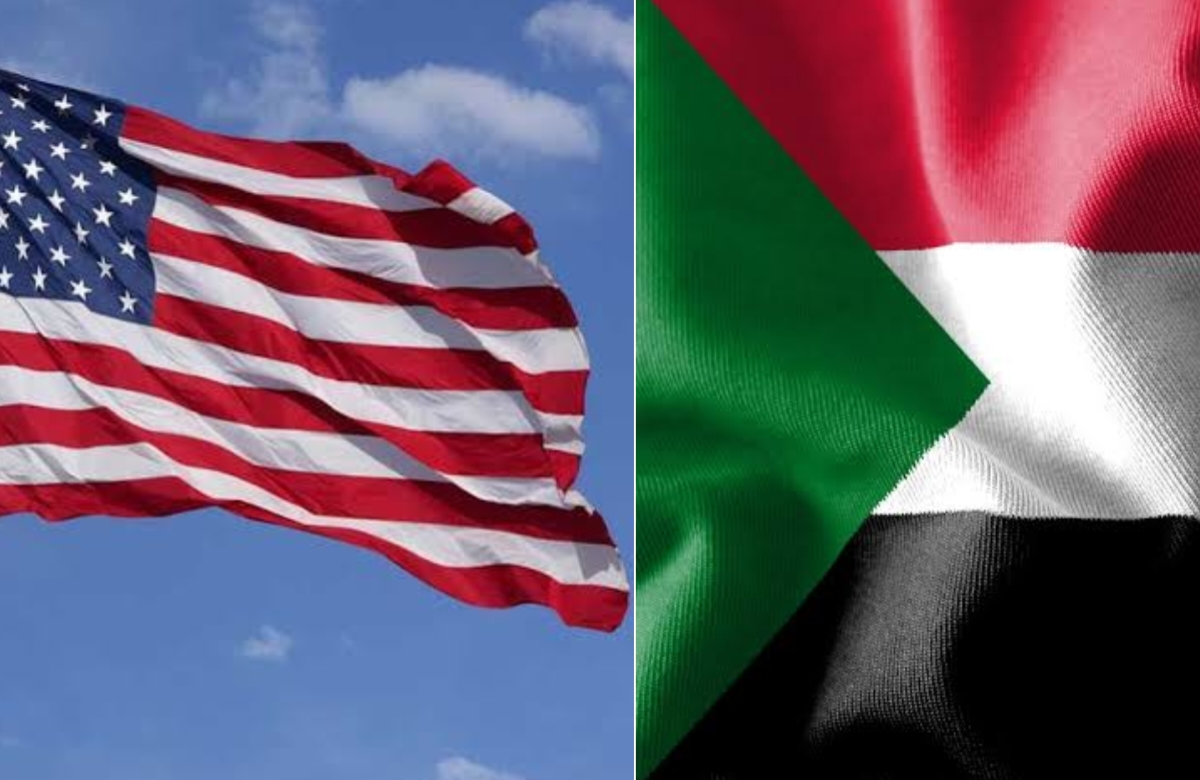
An old African proverb from the Ovimbundu tribe of Angola says:
“Be sure that the devil has two wings just like the angels — but know which one is fluttering around you.”
Certain French security sources, dating back to the 1990s, report that a conversation took place in 1994 between the head of Sudan’s external intelligence service, Major General Hashim Abu Said, and Philippe Rondot, one of the most prominent figures in French military intelligence. Rondot began by asking: “Will you be able to withstand the suffocating economic siege imposed upon you for much longer?” Abu Said replied: “Yes, if we choose to.” Rondot responded: “Soon, we will strike a deal with you that will spare you from testing this will, the consequences of which would weigh heavily on your people’s future. It will, however, secure for us a long-awaited triumph after the French administration’s total failure to regain the confidence and respect of its citizens following its involvement in the assassination of Algerian President Mohamed Boudiaf and the bombing of the Rainbow Warrior ship and the killing of all aboard.”
Khartoum accepted the deal. France’s request was for Sudan to help calm Islamist groups in North Africa, open a communication channel with Paris to prevent acts of armed violence from reaching French soil, and hand over one of France’s most wanted fugitives, Ilich Ramírez Sánchez (known as Carlos), who was residing in Khartoum. In return, Paris would open economic channels with Sudan to break the siege. This explains France’s support for UN Resolution 1372, which aimed to lift international sanctions on Sudan, and France’s subsequent move to obstruct a Security Council resolution against Sudan regarding the situation in Darfur.
The question that arises today is what would prevent Paris from striking a new deal with Khartoum to reduce the impact of the latest U.S. sanctions, particularly given Sudan’s influential files in East Africa — a region France sees as a future strategic destination. Furthermore, senior African security figures, viewed by Paris with cautious concern, continue to visit Sudan. The international community, along with Paris, is fully aware that Sudan has lived with U.S. sanctions for over two decades and that imposing or lifting them will not fundamentally change much. There are always back channels and alternative routes that Khartoum has mastered over three decades — and can skillfully avoid when it chooses.
The recent sanctions imposed by Washington on Khartoum are not separate from the Rapid Support Forces (RSF) militia’s decision to suspend its military operations against the Sudanese Armed Forces. As indicated in our previous article, the militia’s decision was nothing but an American adjustment to the international tempo. Washington today translated this adjustment into sanctions, preceded by statements signaling to any observer that these declarations were merely the beginning of a campaign by most international actors to salvage what remains of their credibility in Sudan, following a series of unexpected setbacks suffered by the RSF — failures that contradicted both international and regional calculations. From an American perspective, this was sufficient reason to acknowledge their mistake and move towards a retreat.
Washington did not wait for the RSF’s announcement to halt its offensives against the Sudanese army before it abandoned its bet on them. That wager had been lost irreversibly since the failure of the Geneva negotiations. Just as the militia leadership realizes this, so too does Washington, knowing well that the RSF no longer controls its own fate. If it were not for the disintegration of moral values within the militia — a condition some French elites have described as Désintégration des valeurs morales — no foreign power would have dared to use it to topple a sovereign state under the pretext of marginalization and injustice.
Anyone who truly seeks the well-being and reform of their homeland does not participate in toppling it from within, in dismantling its legitimate institutions, in erasing its historical identity, or in destroying its intellectual and cultural heritage. Nor would they accept foreign support of any kind to seize power in exchange for surrendering the nation’s resources and the future of its children. The Sudanese people, in all their diversity, are well aware of the catastrophic mistakes committed by most of the past political and military regimes that ruled Sudan. Yet, attempts at reform have always originated from within. This, in itself, is a positive indicator of the ability of certain Sudanese elites to listen and address their flaws when they so desire. Even if those regimes repeatedly failed to meet their people’s aspirations, this does not justify aligning with foreign, paid interests and taking up arms against the state.
In a previous interview I gave to the French media outlet MIDIACTU last November, I stated explicitly: “The Sudanese crisis began with an American decision, continued with an American decision, and will end with an American decision — unless the Sudanese leadership continues to pursue its current strategy, which has proven successful since last August, and rejects any form of negotiation that does not lead to the dismantling of the RSF militia, the disarmament of its forces, and its complete exclusion from the future political and security equation of Sudan. There shall be no return to the pre-October 25, 2021 situation, no return to before April 15, 2023, and no return to the pre-April 2019 order.”
A scholarly contribution by the researcher is available at the following link:
العقوبات الأمريكية على السودان ما بين سقوط المليشيا والتبعثر القيمي
Dr. Amina Al-Arimi
An Emirati researcher specializing in African affairs.


