I am often asked by African elites: why don’t we see detailed reports in Gulf media produced by Gulf scholars on the realities of Sub-Saharan Africa? My answer remains: the lack of interest among Gulf readers in understanding the African landscape, and their general disregard for references written by African thinkers — of whom Sub-Saharan Africa abounds. The real issue is that Gulf readers have long relied on narratives and analyses not authored by Africans, and thus these works fail to reflect the interests and perspectives of African populations. Instead, they serve the outlooks and priorities of the foreign entities producing them.
This has led to a skewed Gulf political vision of Africa — one that misrepresents the continent and stands as a major barrier to genuine understanding. Today, my mission is to begin rectifying that disconnect by helping establish the foundation of a meaningful Gulf-African relationship for the 21st century. I hope we don’t one day reach the philosophical resignation expressed by Martin Heidegger when he said: “We have become so preoccupied with stacking answers on top of each other that we’ve forgotten the original questions.”
The second half of June in Africa unfolded like a race to the bottom, marked by opportunistic political maneuverings. In Gabon, for example, a new law was passed decriminalizing homosexuality — a notable shift from previous penalties of six months’ imprisonment and hefty fines of up to five million CFA francs. Whether this move stemmed from international pressure or Libreville’s own ambitions to appease global organizations remains uncertain. Meanwhile, in Harare, Zimbabwe’s then-Minister of Health, Obadiah Moyo — once one of the most prominent health officials in Africa — was arrested for illegally contracting with an unidentified company that sold medical supplies to the government at exorbitant prices during the COVID-19 pandemic.
In the Democratic Republic of the Congo, President Félix Tshisekedi refused to implement an anti-impunity law and declined to investigate the killing of 320 demonstrators between 2015 and 2018. Was Kinshasa’s position ever likely to be different? In Côte d’Ivoire, former President Henri Konan Bédié — ousted in a 1990s military coup — announced his candidacy in the upcoming presidential elections. He is known for his infamous statement: “Shock therapy is what restores a nation to its natural state.” One might wonder if his return itself constitutes the shock — although it’s doubtful such a shock would bring any healing to his country.
Despite these bleak developments that dashed the hopes of many Africans for a better tomorrow, there were also moments of renewal that signaled a new Africa taking shape — one capable of defining its own narrative in today’s world. I was honored to discuss some of these changes in a televised debate on France 24.
For instance, following its return to the African Union after a 30-year absence, Morocco has given unprecedented attention to Sub-Saharan Africa and has since become the continent’s second-largest investor after South Africa. Morocco’s soft power now stands as a defining feature of its foreign policy in the region.
Another key issue is the Grand Ethiopian Renaissance Dam (GERD), which enjoys broad African support as the continent’s largest hydroelectric project. While Ethiopia views it as a vital development for its future, Egypt and Sudan express legitimate concerns over potential reductions in their share of Nile waters.
The Sudan Partners Conference also stood out as a lifeline for the country’s struggling economy and a signal of the international community’s intent to collaborate on Sudan’s challenges without direct confrontation — opting instead for pragmatic engagement. In Malawi, a historic democratic moment unfolded when opposition leader Lazarus Chakwera — formerly head of the Assemblies of God — was elected president, marking the first peaceful transfer of power to the opposition in the country’s history.
Meanwhile, Burundi reinstated the position of Prime Minister after a 22-year hiatus, appointing Alain-Guillaume Bunyoni — the current Minister of Security — to the role. Notably, Bunyoni has been under U.S. sanctions since 2015, making his appointment a clear message of defiance to Washington, one that Bujumbura seems prepared to stand by after exiting the International Criminal Court.
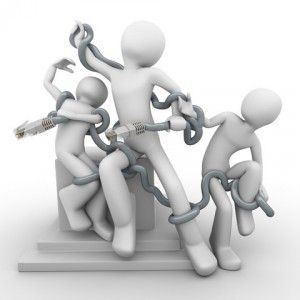
An African proverb says: “When spider webs unite, they can tie down a lion.” Despite the myriad challenges facing the continent, a new intellectual awakening is taking root — one that calls for unity among African peoples as a means of reclaiming identity and agency. Our task now is to prepare ourselves to meet this new Africa — an Africa that demands much from us to truly comprehend it, but surprisingly little to earn its trust.
—
Originally published in Al-Bayan Newspaper:
https://www.albayan.ae/opinions/articles/2020-07-17-1.3913972
Also published by Al Arabiya:
https://www.alarabiya.net/ar/politics/2020/07/19/
Dr. Amina Al-Arimi
An Emirati researcher specializing in African affairs.


