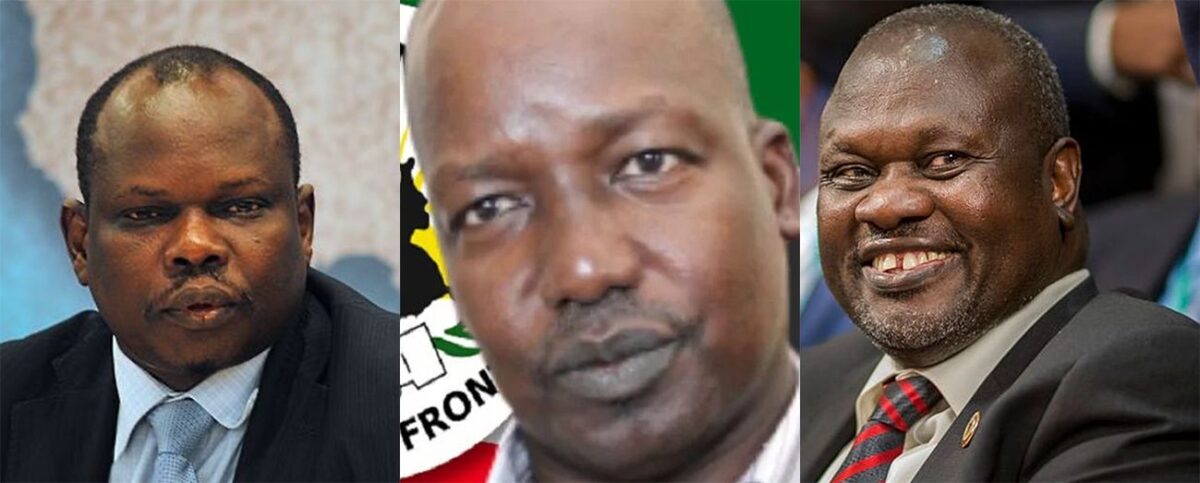
The trial of Riek Machar, leader of the Sudan People’s Liberation Movement (opposition), has cast a long shadow over the future of South Sudan’s political landscape. President Salva Kiir Mayardit’s administration deemed it necessary to make the proceedings public, granting the media access and broadcasting the opening session on national television. This was intended to calm public opinion while Juba remained fully aware that Machar’s trial could mark the beginning of internal rupture and the unraveling of the South Sudanese compact. If such a scenario materializes, Juba may find itself returning to the conditions of 2013, a period described by the French press as “La forêt sanglante”—“the bloody forest.”
Some American academics recall that the late John Garang, founder and leader of the Sudan People’s Liberation Movement, was once asked what concerned him most regarding his first-tier lieutenants. He replied: “I fear that the gun will overshadow thought. Those who make peaceful revolution impossible make violent revolution inevitable. Whoever controls power through arms may depose a ruler, but he cannot govern minds. Peace is not preserved by force, but by understanding.” (It is noteworthy that among Garang’s first-tier lieutenants were figures mentioned in this article: Salva Kiir Mayardit, Riek Machar, and Pagan Amum).
Political tensions in South Sudan are mounting to alarming levels. The opposition, led by Riek Machar, has not only drawn closer to the National Salvation Front led by Thomas Cirillo (former deputy head of the South Sudanese National Army) and announced an alliance with it, but Machar also moved toward rapprochement with the United People’s Alliance led by Pagan Amum. Remarkably, they recently succeeded in garnering support from members of the Dinka ethnic group—the same community to which the president himself belongs. This development represents a critical blow to the National Army under President Salva Kiir Mayardit.
In my view, the alliance among these three leaders is a temporary arrangement dictated by a shared strategic necessity: the urgent goal of ousting Salva Kiir from power. Pagan Amum and Thomas Cirillo are well aware of the intellectual and psychological dimensions of Machar’s personality. He is a man whose political behavior is shaped by a complex web of security considerations, which have influenced even his dealings with southern constituencies, including his own Nuer community. It should also be recalled that the broader South Sudanese public perceives Machar as possessing greater leadership qualities, stability, and charisma than Salva Kiir. This perception, coupled with the mounting challenges faced by the ruling party in Juba, exacerbates Kiir’s vulnerability. The gravest challenge for his administration remains the weakness of the National Army. Despite the deployment of the elite Tiger Division and thousands of Ugandan troops supporting the regular forces, rebels have successfully established supply lines from the Democratic Republic of Congo, enabling them to inflict damage on the army and its allied forces.
Signs that this alliance may not endure are already emerging. After Machar’s SPLM (opposition) recently mobilized a lobbying group to advocate for its interests in the United States, the National Salvation Front—ostensibly an ally of Machar—developed its own independent strategy to bolster its presence in Washington and intensify pressure on Salva Kiir. On September 1, its leader Cirillo signed a contract with the firm MGS, which is now working to arrange his visit to the United States. Should this visit materialize, the dynamics of the tripartite alliance—Riek–Pagan–Cirillo—will undoubtedly be transformed.
A scholarly contribution by the researcher is available at the following link:
تحالف “رياك – باقان- سيريلو” هل سيستمر؟!
Dr. Amina Al-Araimi
Emirati Researcher in African Affairs


